
Freedom to Read Week: Canadian Authors Speak About Uptick in Banned Books
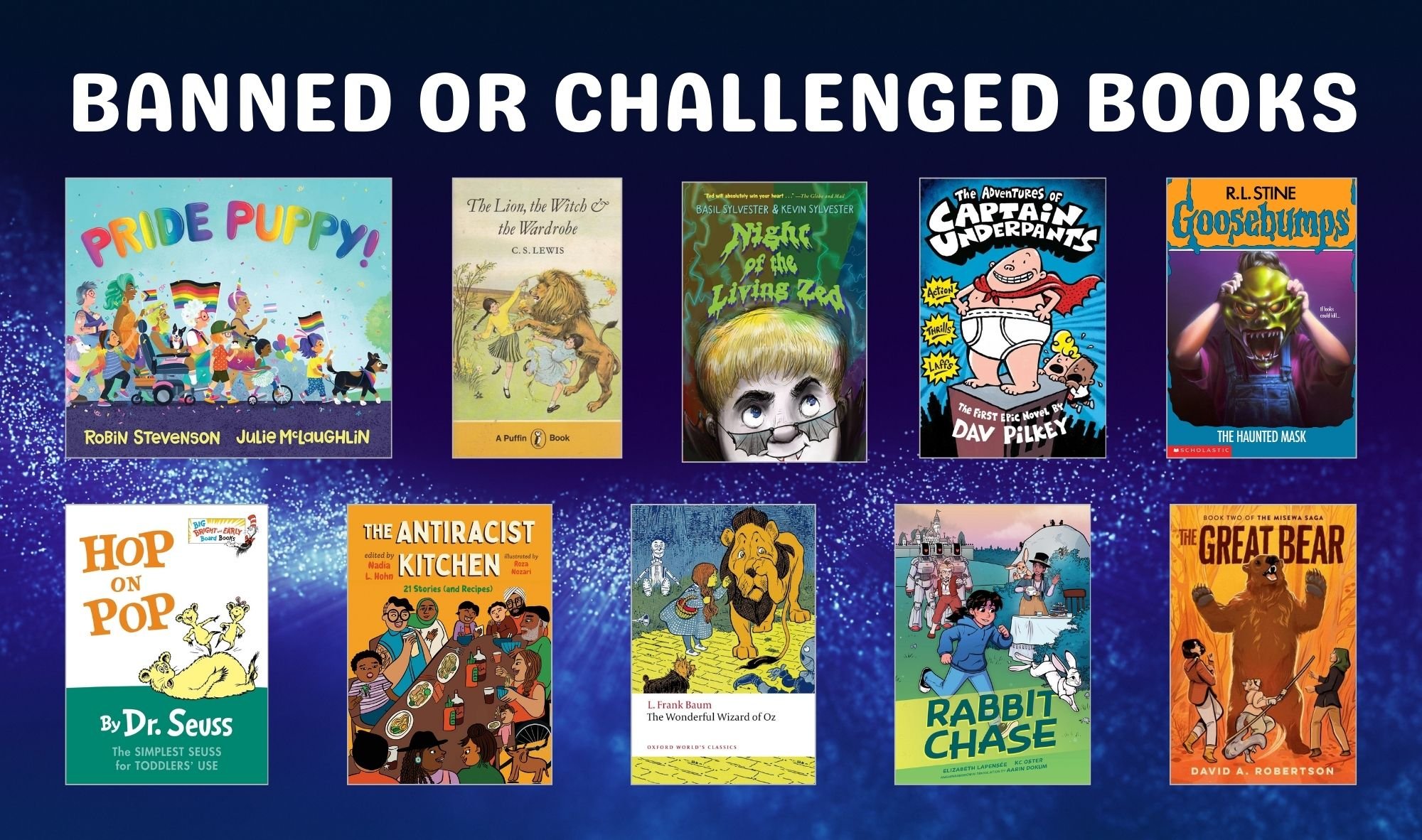
Book challenges are at an all-time high in Canada with most complaints targeting books for children and teens. “Overwhelmingly, book banners continue to target stories by and about people of colour and LGBTQ+ individuals,” PEN notes. “30 percent of the unique titles banned are books about race, racism, or feature characters of colour. Meanwhile, 26 percent of unique titles banned have LGBTQ+ characters or themes.”
In celebration of Freedom to Read Week, we spoke with Canadian children’s authors Mary Beth Leatherdale, David A. Robertson, and Robin Stevenson about their experiences with book challenges and the importance of intellectual freedom:
Mary Beth Leatherdale, author and editor of challenged works including Rabbit Chase
“Now more and more books are being challenged just because of who the characters are—people of colour, Indigenous people, people from other parts of the world, the LGBTQ+ community.
Everyone deserves to see themselves in the books—in their classrooms, in their school libraries, in their public libraries, in the Book Bank—and we all benefit from reading about people who are different from us and have different experiences.”
David A. Robertson, author of challenged books Betty: The Helen Betty Osborne Story and The Great Bear: The Misewa Saga, Book 2
“There is nothing I am more passionate for than someone’s freedom to read. Books give us the opportunity to learn about ourselves, to learn about each other, and through that develop respect for who we are and understanding and respect for the community we live in.”
Robin Stevenson, author of challenged books Pride Colours, Pride Puppy, Queer History A to Z: 100 Years of LGBTQ+ Activism
“Most of the books that are being banned are being pulled from the shelves of high school libraries which means that teenagers are the group being most affected by these bans. [This] erases the autonomy and agency of young people… and disregards the rights of teenagers, including the right to seek information which is a protected right in Canada.”
“Book bans and the hateful rhetoric that often accompanies them do harm. Not just by denying access to information and stories but also by teaching a dangerous message which is that the solution to disagreement is censorship.”
At The Children’s Book Bank, we believe that empowering children to choose their own books is essential to building a love of reading. Banning books that aim to recognize the wide spectrum of human nature and long-underrepresented communities aims to erase and devalue the existence and experiences of our families, friends, and neighbours. Labelling ideas, histories and identities as dangerous is a defensive tactic meant to ease the discomfort of those who refuse to accept others who don’t resemble themselves or share their life experience. It keeps one group from seeing themselves, and another from understanding those whose experience differs from their own.
Dr. Rudine Sims Bishop, Professor Emerita of Education at The Ohio State University
“When children cannot find themselves reflected in the books they read, or when the images they see are distorted, negative, or laughable, they learn a powerful lesson about how they are devalued in the society of which they are a part… Children from dominant social groups have always found their mirrors in books, but they, too, have suffered from the lack of availability of books about others.”
“They need the books as windows onto reality, not just on imaginary worlds. They need books that will help them understand the multicultural nature of the world they live in, and their place as a member of just one group, as well as their connections to all other humans. In this country, where racism is still one of the major unresolved social problems, books may be one of the few places where children who are socially isolated and insulated from the larger world may meet people unlike themselves. If they see only reflections of themselves, they will grow up with an exaggerated sense of their own importance and value.”
How To Combat Book Censorship
So what can you do to oppose the censorship of books? Here are some suggestions:
Attend Meetings & Advocate for Policies
Voice opposition to censorship at library board, school board, and city council meetings, and urge school districts and libraries to follow established, professional procedures for the reconsideration of materials, rather than immediate removalSupport Libraries
Check out challenged/banned books from your local library or buy them from your local bookstore to show your support for uncensored literary accessReport Challenges
Report all attempts to censor educational resources to the Canadian Library Challenges DatabaseParticipate in Campaigns & Raise Awareness
Engage with initiatives like Freedom to Read Week and educate your community, friends, and family about the negative impacts of censorship. Freedom to Read Week has a wonderful list of resources on censorship and free expression, hereContact Elected Officials
Communicate with local and provincial elected officials to express concerns about restrictions on reading materials
RELATED NEWS
Mar. 30, 2026: ‘In an Era of Book Bans, this Organization is Giving Them Away’ (PEN Canada)